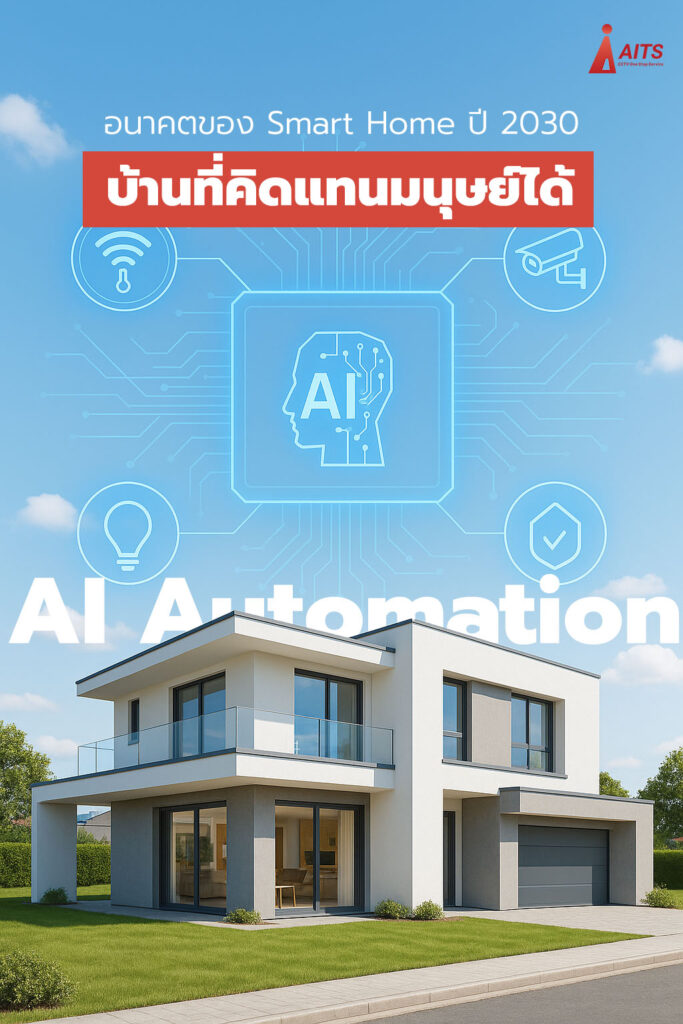
เทรนด์บ้านอัจฉริยะกำลังเปลี่ยนจาก “สั่งงาน” → เป็น “บ้านที่คิดและตัดสินใจเองได้”
โดยมี AI, เซนเซอร์, ระบบกล้อง และข้อมูลพฤติกรรมของผู้อยู่อาศัย เป็นหัวใจหลักของการทำงาน
แนวโน้มสำคัญในปี 2030 จะทำให้ Smart Home ไม่ใช่แค่ความสะดวกสบาย แต่เป็น ระบบความปลอดภัยและคุณภาพชีวิตแบบสมบูรณ์ ที่คอยทำงานแทนมนุษย์ตลอด 24 ชั่วโมง
1. Predictive Automation — บ้านที่รู้จังหวะชีวิตของคุณ
ระบบจะไม่รอให้เจ้าของ “สั่งเปิดไฟ” อีกต่อไป
แต่จะเรียนรู้พฤติกรรม เช่น เวลาตื่น อาบน้ำ เดินเข้าห้องทำงาน และปรับสภาพแวดล้อมอัตโนมัติ
ตัวอย่างการทำงาน:
- ไฟเปิดตามระดับแสงธรรมชาติ
- แอร์ปรับอุณหภูมิตามจำนวนคนในห้อง
- ม่านเปิดเมื่อถึงช่วงเวลาที่เจ้าของบ้านตื่นนอน
- ปิดอุปกรณ์ไฟฟ้าเมื่อไม่มีการเคลื่อนไหว
สิ่งเหล่านี้ทำได้จาก AI + เซนเซอร์ + ระบบกล้องที่วิเคราะห์พฤติกรรมอย่างแม่นยำ
2. AI-CCTV Integration — กล้องวงจรปิดที่ทำได้มากกว่าบันทึกภาพ
ในอนาคต กล้องจะกลายเป็น “เซนเซอร์หลักของบ้าน”
ระบบจะสามารถวิเคราะห์เหตุการณ์ได้แบบ real-time เช่น:
- แยกคน รถ สิ่งของ
- ตรวจจับวัตถุแปลกปลอม
- แจ้งเตือนตามความเสี่ยงเฉพาะบ้านแต่ละหลัง
- สร้างรายงานเพื่อปรับปรุงความปลอดภัย
ระบบทั้งหมดจะเชื่อมกับ Automation เช่น
เมื่อพบคนแปลกหน้า → ไฟเปิด, ประตูล็อก, ส่งแจ้งเตือนทันที
3. Whole-Home Network — อินเทอร์เน็ตคือโครงสร้างพื้นฐานของบ้านยุคใหม่
บ้านในปี 2030 จะมีอุปกรณ์เฉลี่ย 50–120 ชิ้น ทำให้โครงสร้างเน็ตต้อง “เสถียรในระดับองค์กร”
โครงสร้างใหม่ที่ทุกบ้านจะใช้:
- Wi-Fi 6/7 → ความเร็วสูง โหลดบาลานซ์อัจฉริยะ
- Smart Access Point → แบ่งโหลดตามตำแหน่งคนเดิน
- ระบบ Fiber ถึงอุปกรณ์หลัก
- Network Monitoring → แจ้งเตือนทันทีเมื่ออุปกรณ์ล่ม
นี่คือพื้นฐานสำคัญที่ทำให้ Smart Home ทำงานได้ 100%
4. Home Security 360° — ทุกระบบความปลอดภัยต้องรวมศูนย์
ปี 2030 บ้านจะรวมทุกระบบให้ทำงานร่วมกัน ได้แก่
- กล้อง
- ประตู
- ระบบกันขโมย
- ไฟ
- ม่าน
- เซนเซอร์ควัน น้ำท่วม แก๊สรั่ว
ผลลัพธ์คือ บ้านที่สามารถวิเคราะห์เหตุการณ์ → ตัดสินใจ → ลงมือทำ ได้อัตโนมัติ
5. Experience Before Technology — บ้านที่ออกแบบจาก “ชีวิตจริง” ไม่ใช่ Gadget
ผู้บริโภคจะไม่มอง Smart Home เป็นของเล่นอีกต่อไป
แต่ต้องการระบบที่
- ใช้งานง่าย
- ไม่ซับซ้อน
- เชื่อถือได้
- ลดปัญหาในชีวิตจริง
- รองรับอนาคตได้หลายปี
AITS จะเป็นบริษัทที่ออกแบบ Smart Home บนหลักการ Human Lifestyle × Engineering × AI Integration
สรุป
บ้านในอนาคตจะไม่ใช่แค่สถานที่อยู่อาศัย แต่จะเป็น ระบบอัจฉริยะครบวงจร ที่ช่วยบริหารพลังงาน ความปลอดภัย และความสะดวกได้อย่างไร้รอยต่อ
AITS พร้อมออกแบบโครงสร้าง Smart Home ที่รองรับเทคโนโลยีอีก 10 ปีข้างหน้า เพื่อให้ลูกค้าทุกคนใช้งานได้อย่างมั่นใจและปลอดภัยสูงสุด
— Let AITS Set the Standard —
📞 ออกแบบและติดตั้ง Smart Home กับเรา
โทร: 02-878-2951 ต่อ 100
LINE: @aitscctv
Facebook: fb.com/aitscctv
🛒 Lazada: AITS Official Store
🌐 Website: www.aitscctv.com
The Future of Smart Home 2030: A Home That Thinks for You
Smart Home technology is shifting from “command-based control” to “AI-driven autonomous living.”
By 2030, homes will learn routines, predict behavior, and manage safety, comfort, and energy automatically — without users needing to touch a single button.
The core technologies include AI, smart sensors, CCTV analytics, and whole-home network infrastructure, working together as one intelligent ecosystem.
1. Predictive Automation — The Home That Understands Your Lifestyle
Instead of waiting for user commands, AI will anticipate daily behaviors and act proactively.
Examples of AI-driven automation:
- Lighting adjusts based on natural brightness and room occupancy
- Air conditioning adapts to human presence
- Curtains open when you normally wake up
- Devices turn off when no motion is detected
This works through behavioral learning models, motion sensors, and integrated CCTV analytics.
2. AI-CCTV Integration — Cameras That Do More Than Record
CCTV will evolve into the primary sensor of the smart home, capable of analyzing real-time events.
Key capabilities:
- Human, vehicle, and object classification
- Left-behind and unusual-object detection
- Risk-based intelligent alerts
- Automated security responses
For example, when an intruder is detected:
Lights turn on → Doors lock → Alerts are sent instantly.
3. Whole-Home Network Architecture — Enterprise-Level Stability in Every Home
With 50–120 devices per household expected in 2030, network reliability becomes a core foundation of the smart home.
Modern infrastructure includes:
- Wi-Fi 6/7 for high throughput and smart load balancing
- Intelligent access points placed by heatmap design
- Full-fiber backbone for latency-critical devices
- 24/7 network monitoring and automated fault detection
A strong network is the backbone that makes every automation possible.
4. Unified Home Security 360° — All Systems Must Work as One
The future of security requires full integration of:
- CCTV
- Access control
- Alarm systems
- Lighting
- Curtains
- Environmental sensors (smoke, water, gas)
The home becomes a self-analyzing and self-acting security system.
5. Human-Centric Smart Living — Designed for Real Life, Not Just Gadgets
Consumers want systems that are:
- Simple to use
- Highly reliable
- Low maintenance
- Truly helpful for everyday living
- Future-proof for the next decade
AITS focuses on Human Lifestyle × Engineering Excellence × AI Integration, delivering high-trust smart home solutions made to last.
Conclusion
Smart Home 2030 is not about gadgets — it is about intelligent living.
AITS is committed to designing a next-generation smart home ecosystem that provides security, automation, and seamless comfort adapted to the future.
— Let AITS Set the Standard —
📞 ออกแบบและติดตั้ง Smart Home กับเรา
โทร: 02-878-2951 ต่อ 100
LINE: @aitscctv
Facebook: fb.com/aitscctv
🛒 Lazada: AITS Official Store
🌐 Website: www.aitscctv.com