ยุคที่บ้านมีอุปกรณ์ตั้งแต่ 50–150 ชิ้นขึ้นไป ทำให้ “ระบบอินเทอร์เน็ต” กลายเป็น โครงสร้างพื้นฐานหลักของบ้าน ไม่ต่างจากระบบไฟฟ้า น้ำประปา หรือระบบความปลอดภัย
บ้านยุคใหม่จึงต้องการโครงสร้างเน็ตที่ออกแบบอย่างมืออาชีพแบบ Whole-Home Network Architecture
1. บ้านไม่ได้ใช้อินเทอร์เน็ตแบบเดิมอีกต่อไป
อุปกรณ์ในบ้านปี 2025–2030 มักประกอบด้วย
- Smart TV
- CCTV 10–24 ตัว
- Mobile & Tablet 4–10 เครื่อง
- Smart Home Devices 20–80 ชิ้น
- Smart Appliances เช่น ตู้เย็น, แอร์, เครื่องซักผ้า IoT
- ระบบ Access Control
- ระบบ EV Charger ที่ต้องเชื่อม Cloud
หากใช้แค่ Router ของผู้ให้บริการ (ISP) จะเกิดปัญหา:
- เน็ตหลุดบ่อย
- Wi-Fi ช้าในบางจุด
- ค่าหน่วง (Latency) สูง ทำให้ AI ทำงานไม่ต่อเนื่อง
- กล้อง Offline แบบไม่รู้ตัว
- Automation ค้างหรือสั่งงานล่าช้า
สาเหตุคือ Router เหล่านี้ออกแบบมาสำหรับ “บ้านยุคเก่า” ไม่ใช่ Smart Home เต็มระบบ
2. Whole-Home Network คืออะไร?
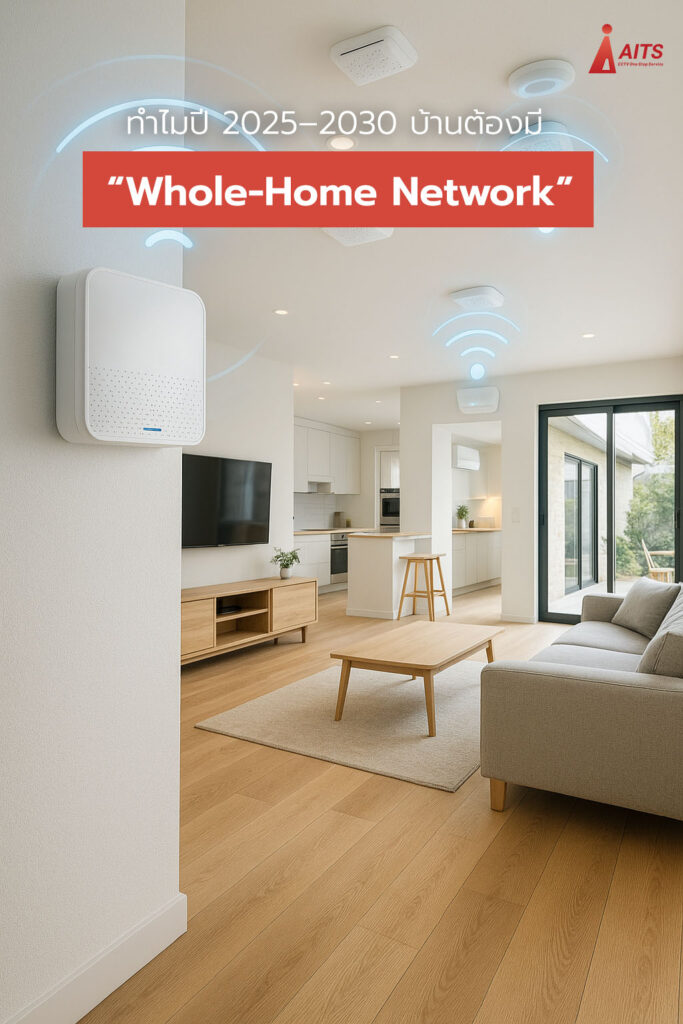
คือ “สถาปัตยกรรมเครือข่ายของบ้านทั้งหลัง” ที่ประกอบด้วย:
- Main Router ระดับธุรกิจ
- Access Point หลายจุด (AP) แบบกระจายสัญญาณจริง ไม่ใช่ตัวเพิ่มสัญญาณราคาถูก
- สาย LAN/Fiber ต่อถึงอุปกรณ์หลัก เช่น NVR, TV, AI Hub
- VLAN แยกอุปกรณ์คน–อุปกรณ์ IoT เพิ่มความปลอดภัย
- Load Balancing + Roaming Seamless
- Network Monitoring 24/7
สิ่งเหล่านี้ทำให้ทั้งบ้านมี Wi-Fi ที่แรงเท่ากันทุกจุด และระบบ IoT ทำงานแบบไร้รอยต่อ
3. ทำไมต้องใช้ Access Point แบบมืออาชีพ?
AP ที่ดีสามารถ:
- รองรับอุปกรณ์ 50–200 ชิ้นพร้อมกัน
- กระจายสัญญาณเสถียร
- เชื่อมต่อข้ามห้องโดยไม่สะดุด (Seamless Roaming)
- ลดสัญญาณรบกวนจากอุปกรณ์ข้างบ้าน
- ควบคุมผ่าน Cloud และอัปเดตเฟิร์มแวร์อัตโนมัติ
การใช้ Repeater ราคาถูกมักทำให้:
- สัญญาณตก
- ความเร็วเหลือแค่ 20–40%
- CCTV Offline เป็นระยะ
4. Network for Smart Home & AI — สำคัญมากกว่าที่คิด
Smart Home และ AI ต้องการอินเทอร์เน็ต “เสถียร” มากกว่า “แรง”
เพราะทุกคำสั่งต้องผ่านเครือข่าย เช่น:
- เปิดไฟ
- ปิดม่าน
- สั่งกล้องหมุน
- ตรวจสอบบ้านจากมือถือ
- ส่งภาพ AI และแจ้งเตือน
ถ้าเน็ตสะดุด Automation จะล้มเหลวทันที
5. โครงสร้าง Whole-Home Network ของ AITS
AITS ออกแบบแบบเดียวกับมาตรฐานองค์กร (Enterprise Standard):
- Heatmap Survey ก่อนติดตั้ง
- วาง AP แบบ 3D Coverage
- แยกวง IoT / Guest / Camera
- ออกแบบเส้นทางเดินสาย Fiber และ LAN
- ทดสอบ Speed ในทุกห้อง
- ทำรายงาน Network Health ให้ลูกค้า
นี่คือเหตุผลที่บ้าน, วิลล่า, โรงแรม และโครงการจัดสรรจำนวนมากเลือก AITS
สรุป (TH)
บ้านยุคใหม่ต้องการโครงสร้างเน็ตเหมือน “บริษัทขนาดใหญ่ย่อส่วน” เพื่อให้กล้อง, IoT, AI และระบบทั้งบ้านทำงานได้สมบูรณ์ Whole-Home Network คือหัวใจของ Smart Home 2030 ที่ทุกบ้านจำเป็นต้องมี
— Let AITS Set the Standard —
📞 ออกแบบและติดตั้ง Smart Home กับเรา
โทร: 02-878-2951 ต่อ 100
LINE: @aitscctv
Facebook: fb.com/aitscctv
🛒 Lazada: AITS Official Store
🌐 Website: www.aitscctv.com
Why Homes in 2025–2030 Require Enterprise-Grade Whole-Home Network Architecture
Modern homes now rely on 50–150 connected devices, turning the home network into a critical infrastructure — equal in importance to electricity, water, and security systems.
Traditional ISP routers can no longer support this demand.
Homes need Whole-Home Network Architecture designed with enterprise standards.
1. Your Home Uses More Devices Than Ever Before
A modern household includes:
- Smart TVs
- 10–24 CCTV cameras
- 4–10 phones/tablets
- 20–80 IoT devices
- Smart appliances
- Access control systems
- EV chargers connected to cloud platforms
With only an ISP router, problems occur:
- Frequent disconnections
- Dead zones
- High latency
- CCTV going offline unexpectedly
- Automation delays
Because consumer-grade routers were not designed for today’s smart home ecosystem.
2. What Is Whole-Home Network Architecture?
A fully structured network including:
- Enterprise-grade main router
- Multiple ceiling/wall-mounted Access Points (APs)
- LAN/Fiber backbone to key devices (TV, NVR, AI hubs)
- VLAN separation for IoT security
- Seamless roaming
- 24/7 network monitoring
This ensures stable Wi-Fi, consistent performance, and reliable smart home automation.
3. Why Professional Access Points Matter
High-quality APs provide:
- Support for 50–200 devices simultaneously
- Stable signal distribution
- Seamless roaming when walking between rooms
- Reduced interference
- Cloud-based management and updates
Repeaters cannot do this — they cut bandwidth and cause instability.
4. Smart Home + AI Requires Ultra-Stable Networking
Smart Home commands depend on real-time networking:
- Lights
- Curtains
- CCTV movement
- Notifications
- AI analytics
If the network drops even briefly, automation fails.
5. AITS Whole-Home Network Standard
AITS designs networks using enterprise methodology:
- Heatmap analysis
- Strategic AP placement
- IoT / Guest / Camera VLANs
- Fiber + LAN routing
- Speed testing for every room
- Complete network health report
This ensures strong, stable, long-lasting performance.
Conclusion
Smart Homes of 2030 require enterprise-level network foundations.
AITS delivers professional whole-home network architecture that ensures stability, security, and future-proof performance.
— Let AITS Set the Standard —
📞 ออกแบบและติดตั้ง Smart Home กับเรา
โทร: 02-878-2951 ต่อ 100
LINE: @aitscctv
Facebook: fb.com/aitscctv
🛒 Lazada: AITS Official Store
🌐 Website: www.aitscctv.com